Published August 15, 2025
Queen Bee – Marking
Marking queen bees helps beekeepers monitor the queen’s age, the condition of the bee colony and manage the apiary more effectively.
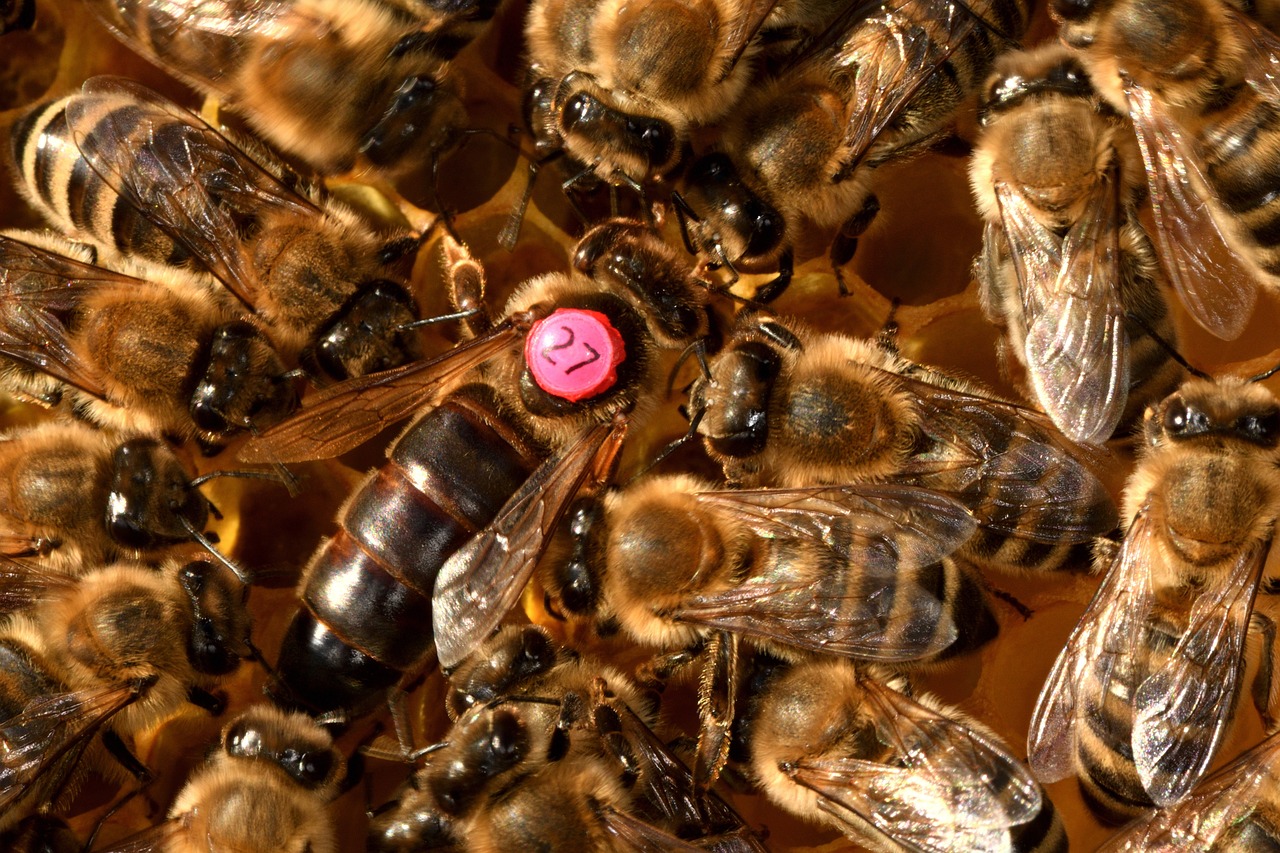
Did you know that the queen bee – the queen of the hive – is often specially marked in our apiary? It is a fascinating process that plays an important role in managing a large number of bee colonies.
Marking queen bees not only helps us run the apiary more easily, but also gives us interesting insights into the world of bees.
Why is queen marking important?
The queen bee is the heart of every hive, as she is responsible for laying eggs, which allows a new generation of bees to develop.
Beekeepers mark queens so they can easily identify them during hive inspections. Marking makes it easier to track the queen’s age, monitor her condition and notice when she has been replaced, either naturally or by the beekeeper.
What does the marking process look like?
Queen bees are gently held in place and marked with a special non-toxic paint or marker. A small coloured dot is placed on their thorax, which does not interfere with their daily duties, but allows the beekeeper to quickly locate them in the colony.
We prefer to use special numbered tags called opalith plates. They allow us to mark each queen in the BeeValley apiary individually.
The process is quick and safe for both the queen and the entire bee colony.
Colours and their meaning
Interestingly, the colours used for marking queens are not random. There is an international colour system that allows beekeepers to identify the year in which a queen was introduced to the hive:
- Blue – queen from 2025 or 2030,
- White – queen from 2026 or 2031,
- Yellow – queen from 2027 or 2032,
- Red – queen from 2028 or 2033,
- Green – queen from 2029 or 2034.
This system works in five-year cycles, allowing beekeepers to quickly assess how old a queen is and whether she is still able to support the proper development of her colony.
A well-cared-for queen bee – what does this mean for honey quality?
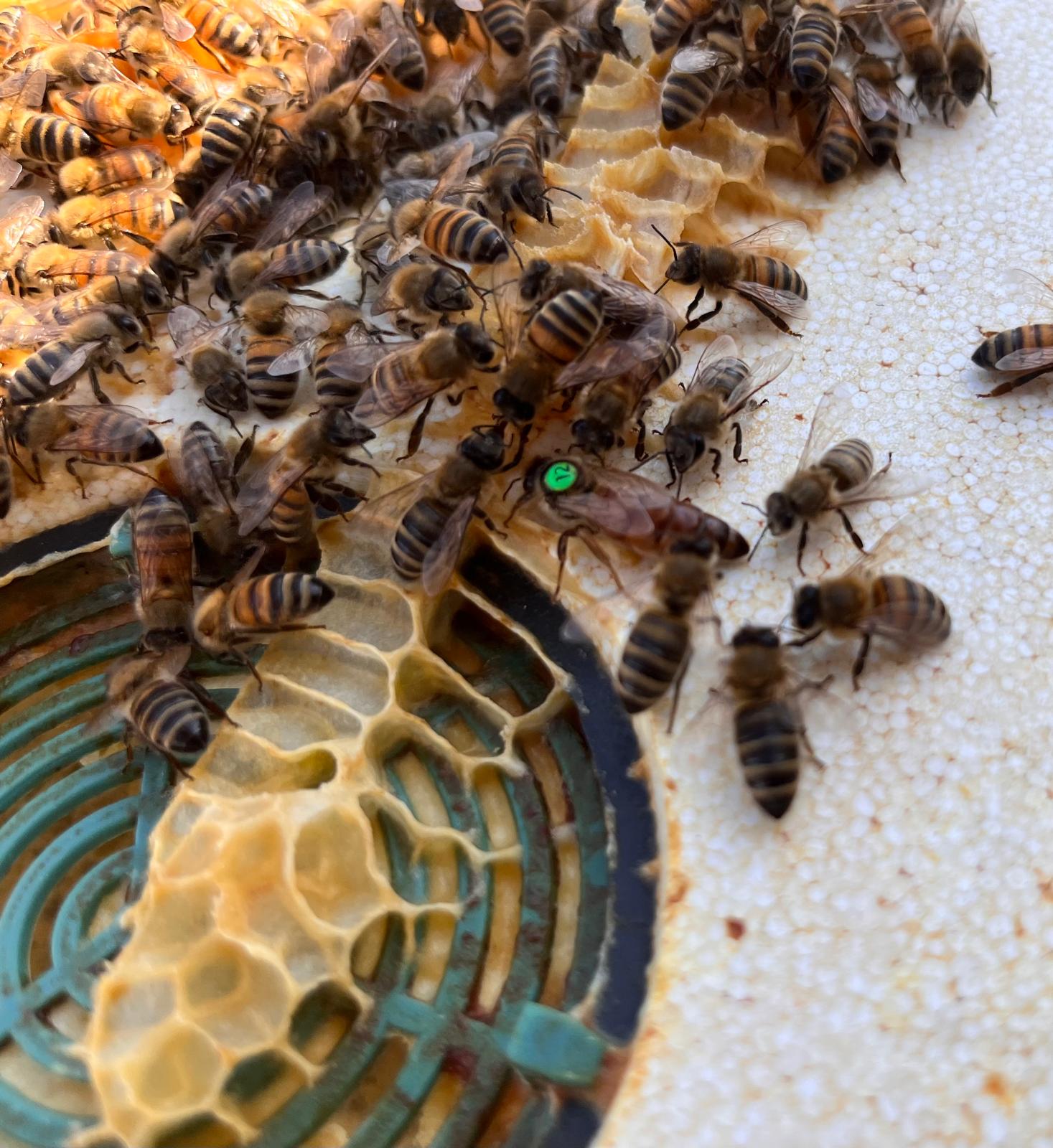
Marking queens indirectly affects the quality of honey, because a healthy and young queen means a strong and active bee colony that is more resistant to disease and difficult weather conditions.
This allows beekeepers to monitor the health of the colony and respond appropriately, which in turn supports the quality of the honey.
Summary
Marking queen bees is a practice used by beekeepers to help manage hives and monitor the health of the queen.
Thanks to the international colour system, beekeepers can accurately track the queen’s age and take care of the condition of the bee colony.
For consumers, this is a sign that the honey reaching their tables comes from healthy and well-managed bee colonies.