Published May 3, 2025
Before Honey Reaches the Jar – Bee Colony Development
Spring observations in the BeeValley apiary show how bee activity changes from the first flight in February to intense work in May.
In the BeeValley apiary, every day brings new observations and signals that help us care for the wellbeing of our bee colonies and produce honey responsibly.
One of the key moments in the beekeeper’s calendar is the first flight – when bees leave the hive after the winter break. This year, we compared two days: 26 February and 3 May.
Looking at them side by side perfectly shows the enormous transformation that takes place in bee colonies between the end of winter and the height of spring.
Spring in the BeeValley apiary – differences in bee flights on 26 February and 3 May
Spring in the apiary is a time of dynamic change. A few weeks may seem like a short period, but in the world of bees it is a time of enormous development.
Comparing the first cautious flights after winter with the activity seen in May shows how strongly bee colonies respond to temperature, available forage and longer days.
26 February – the first flight after winter
This February was mild, and on the 26th day of the month the temperature rose above 10°C. This meant one thing: it was time for the first cleansing flight.
This is an important moment, because after winter the bees can leave the hive for the first time and relieve themselves outside the nest.
Their behaviour was still cautious. Individual bees flew out of some hives, but not all colonies were ready for greater activity yet. The flights were short and not very intense.
For a beekeeper, this is a time of careful observation: which colonies have overwintered well, and which need extra care.
In some hives, a quiet humming could be heard – a sign that the queen had already started laying, although still on a small scale.
Compared with the previous year, this flight was significantly less intense.
3 May – the bees are fully active, and the honey is almost ready
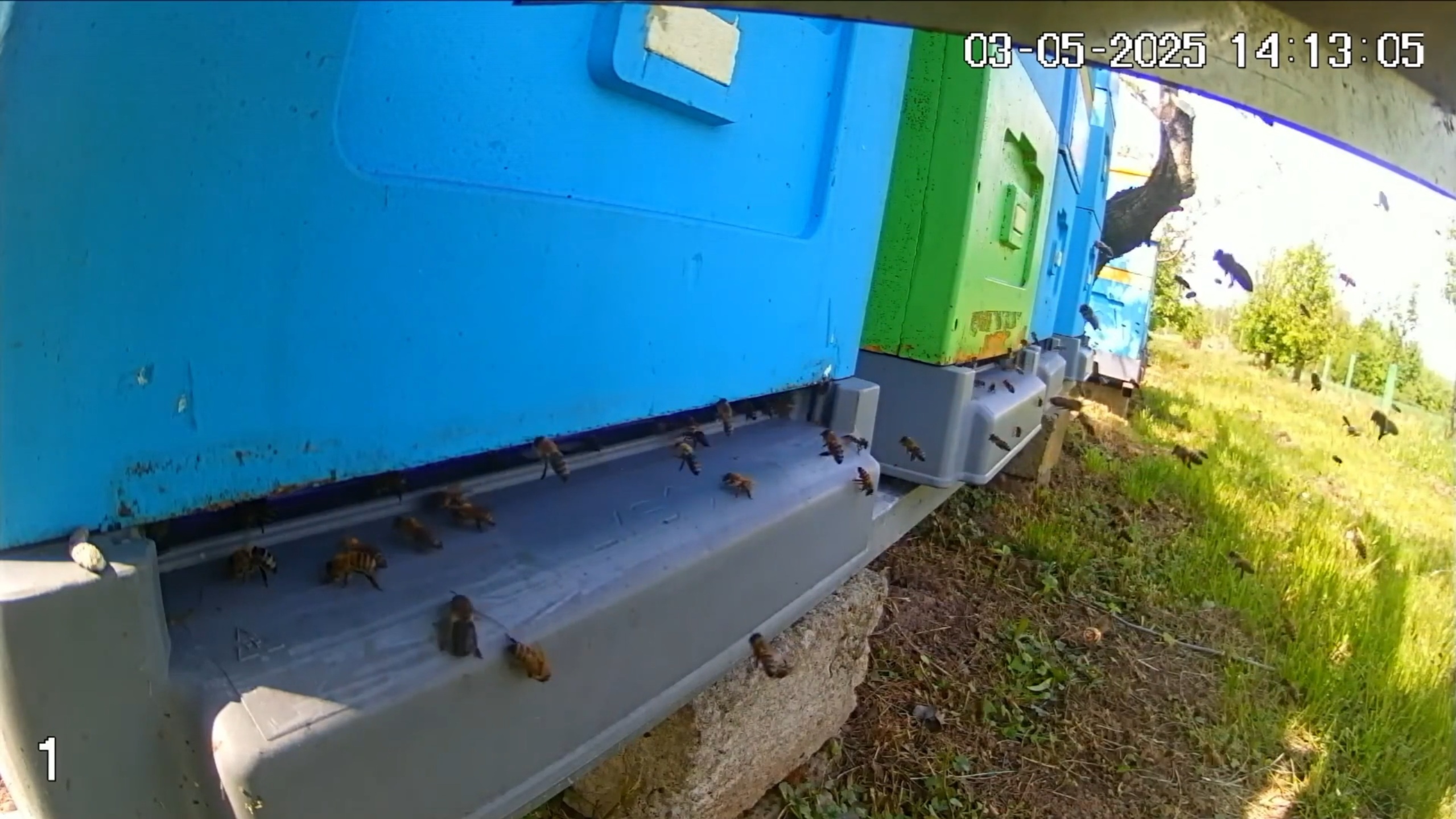
A few weeks later, on 3 May, the apiary looked completely different. The weather was favourable, the temperature reached around 20°C, and there was intense movement around every hive.
Bees were returning with pollen on their legs – yellow, white and even orange – showing that they were visiting many different plants.
It was clear that the colonies were already strong and that the season was fully underway.
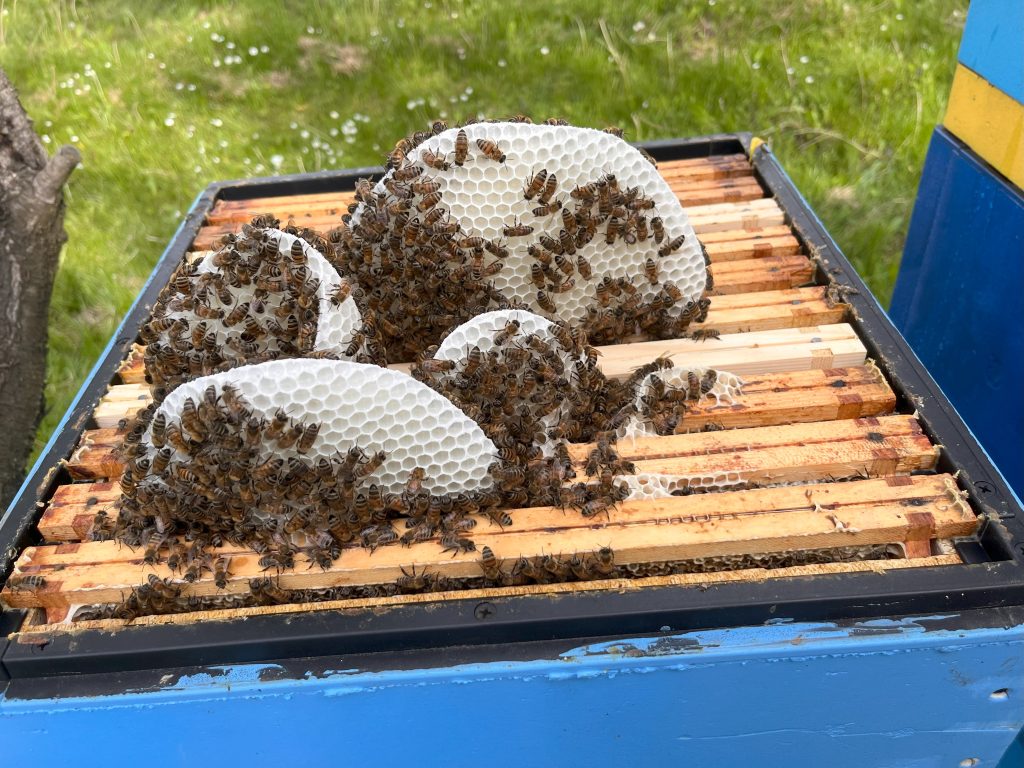
The queens were laying on a large scale, while the bees were building combs and actively collecting nectar.
In these conditions, feeding is no longer needed – the bees feed on what they find in nature.
For us, this is also a sign that the first honey is approaching: delicate spring honey, often from dandelion, maple, cherry or plum blossom.
Why is this comparison important?
Observing changes in bee activity over several weeks is very satisfying.
It also shows how strongly bees depend on weather conditions and the availability of forage.
In February, we make sure the bees have the strength to develop, and in May we can see how our earlier work has brought results.
It is thanks to this daily care, observation and responsible apiary management that the honey which later reaches the jars is the result of natural work by strong and healthy bee colonies.
Interesting fact
Can you tell the drone apart from the worker bees in the photo below? 🙂